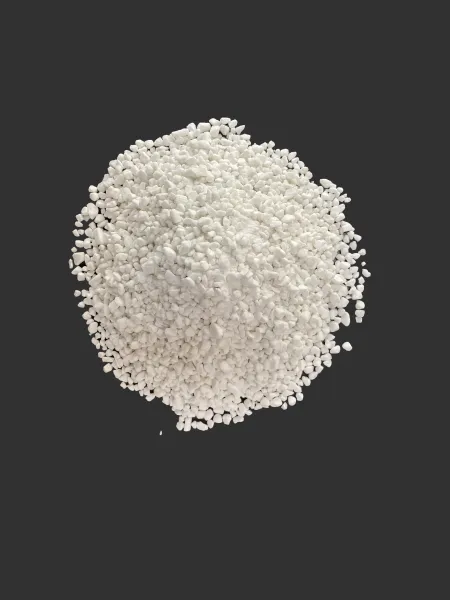
For farmers seeking reliable yield increases and soil health improvements, the choice of nitrogen fertilizer can make or break a season. While urea and ammonium nitrate dominate many fields, recent field trials show that high-purity sulfate ammonium—especially the caprolactam-grade variant—is emerging as a smarter, more effective solution for modern agriculture.
Sulfate ammonium (NH₄SO₄) delivers two critical nutrients: nitrogen (N) and sulfur (S)—both essential for protein synthesis, chlorophyll production, and root development. Unlike urea, which requires microbial conversion before plants can absorb it, sulfate ammonium dissolves instantly in water, making its nutrients available within hours rather than days.
A 2023 study from the University of Nebraska-Lincoln found that crops treated with sulfate ammonium absorbed up to 30% more nitrogen during early growth stages compared to urea-treated plots—leading to earlier flowering and stronger biomass accumulation.
Real-World Results: In a 100-hectare wheat farm in Kansas, applying 120 kg/ha of sulfate ammonium increased yields by an average of 17% over three consecutive seasons compared to traditional urea use—with no signs of soil acidification.
One often overlooked benefit? Sulfate ammonium acts as a natural soil conditioner. Its sulfate ions help neutralize excessive acidity in clay-rich soils, while the ammonium form supports beneficial microbial activity. This means better root penetration, improved water retention, and reduced need for lime applications.
In contrast, long-term urea use has been linked to soil compaction and nutrient leaching—particularly in sandy loams where nitrogen loss exceeds 40% annually (FAO, 2022).
To maximize effectiveness:
Farmers who follow these practices report not only higher yields but also fewer disease outbreaks—thanks to enhanced plant vigor and sulfur’s role in strengthening cell walls against pathogens like Fusarium and powdery mildew.
Pro Tip: For best results, test your soil pH first—sulfate ammonium works especially well when pH is between 5.5 and 7.0. Avoid over-application (>200 kg/ha), as excess ammonium can cause temporary toxicity in sensitive crops like corn.
If you're tired of inconsistent harvests and want a fertilizer that actually improves both crop performance and soil quality, sulfate ammonium is worth serious consideration.
See real-world results on your own land—no risk, just data-driven outcomes.
Download Our Sulfate Ammonium Use Guide & Request Samples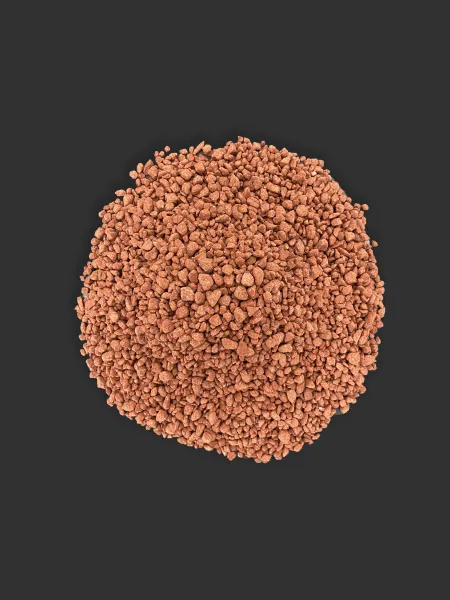
 233
|
233
|
 high purity ammonium sulfate
soil improvement
crop disease resistance
sulfur fertilizer
nitrogen-rich fertilizer
high purity ammonium sulfate
soil improvement
crop disease resistance
sulfur fertilizer
nitrogen-rich fertilizer
 289
|
fertilizer use efficiency
scientific fertilization timing
precision agriculture technology
intelligent fertilization equipment
fertilization method optimization
289
|
fertilizer use efficiency
scientific fertilization timing
precision agriculture technology
intelligent fertilization equipment
fertilization method optimization
 433
|
high-efficiency fertilizers
controlled-release fertilizer benefits
slow-release fertilizer characteristics
compound fertilizer applications
scientific fertilization techniques
433
|
high-efficiency fertilizers
controlled-release fertilizer benefits
slow-release fertilizer characteristics
compound fertilizer applications
scientific fertilization techniques
 408
|
High - quality ammonium sulfate
Nitrogen - sulfur synergy
Soil improvement fertilizer
Crop stress resistance
Water - soluble nitrogen fertilizer
408
|
High - quality ammonium sulfate
Nitrogen - sulfur synergy
Soil improvement fertilizer
Crop stress resistance
Water - soluble nitrogen fertilizer
.jpg?x-oss-process=image/resize,h_600,m_lfit/format,webp) 421
|
Nitrogen-sulfur balance
sustainable agriculture
high-efficiency ammonium sulfate
soil fertility management
crop nutrition optimization
421
|
Nitrogen-sulfur balance
sustainable agriculture
high-efficiency ammonium sulfate
soil fertility management
crop nutrition optimization
.jpg?x-oss-process=image/resize,h_600,m_lfit/format,webp)





.jpg?x-oss-process=image/resize,h_600,m_lfit/format,webp)